

Remember when texting first came out and you had to pay per message if you went over your monthly limit?
I was just explaining this to my 8-year-old recently and told him about the notebook I used to track every text I sent (I even found it). After my older sister racked up a HUGE overage one month and had to pay my dad back, my type-A self was not taking any chances.
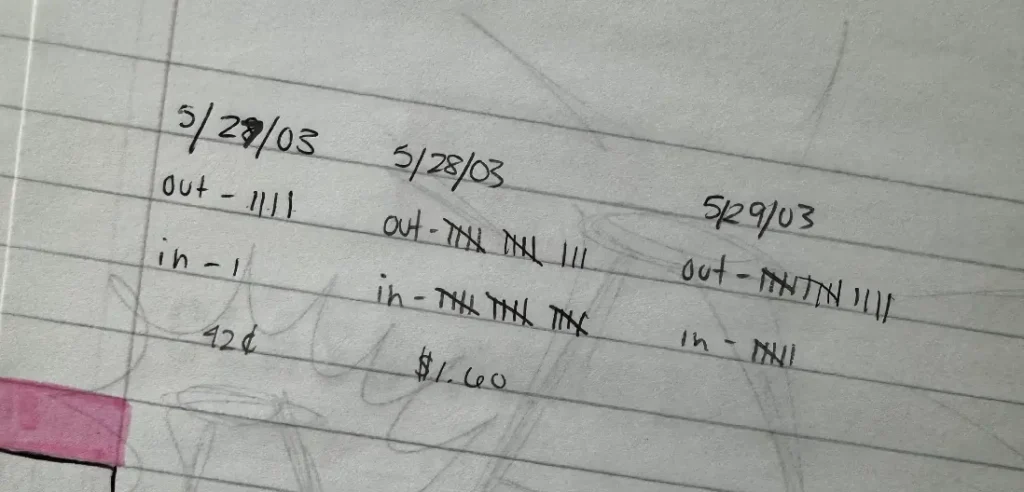
Back then, every message had a cost, so we thought before we sent one.
Now? People are texting and slacking literal stream-of-consciousness thoughts all day long.

And honestly, I think it is making a lot of teams less productive, not more.
The Modern Workplace Is Full of Constant Interruptions
I see this all the time with small contractor teams.
Updates are pinging from every direction:
- Slack
- Your PM tool
- Texts (whyyyyy tho, please stop this)
Everyone has technically been “notified,” but tasks are still falling through the cracks. Team members are constantly communicating, yet somehow nothing is actually moving forward efficiently.
I call this paralysis by pings.

It feels like everyone is working because everyone is talking, but in reality, your team is spending most of their day context-switching instead of doing focused work.
Why Constant Communication Is Hurting Productivity
Here’s what I think is actually happening: When communication has no cost, it has no filter.
Slack makes it incredibly easy to fire off a message without stopping to ask:
- Does this actually need to be sent right now?
- Is this urgent?
- Could this live somewhere else?
- Could I solve this myself first?
One quick message may only take two seconds to send, but it can completely derail the person receiving it.
The internet tells me:
"it takes an average of 23 minutes and 15 seconds to return to a high-level, "in the zone" state of focus after being interrupted. This phenomenon is often referred to as the "cognitive switching penalty."
Multiply that across an entire team, all day long, and suddenly everyone is mentally exhausted while still feeling behind.
And group chat culture changes the way people work. Instead of thinking through a problem first, people often drop a question into Slack the second it pops into their head. Once it’s posted, the task mentally becomes someone else’s responsibility and if nobody responds quickly, progress stalls.
Over time, teams unintentionally build a culture of interruption instead of ownership.
More Messages Does Not Mean Better Communication
This is not a knock on teams or contractors. Heck, I have caught myself doing this too because Slack makes it easy.
But once you start noticing it, you realize how much unnecessary noise exists in most businesses.
The issue usually is not a bad team. It is a lack of communication structure.
Without clear systems, everything starts feeling equally urgent. Small questions interrupt deep work. Updates get buried. Team members rely on memory instead of documentation. Leadership gets pulled into every tiny decision because there is no centralized place for information to live.
And eventually, everyone feels overwhelmed.
The Fix: Build a Communication System Instead of a Reaction Culture
The solution is not better notification settings.
The solution is building systems that reduce unnecessary interruptions in the first place.
For me, that means creating one central place where everything lives:
- Tasks
- Updates
- Questions
- Statuses
- Delegated work
- Due dates
- Feedback
My team knows where to check for information without needing to ping me constantly, and I can see the full picture without chasing people down all day.
Less noise.
More ownership.
More actual work getting done.
Create a Communication SOP for Your Team
One of the best things you can do as a business owner is create a Communication SOP (Standard Operating Procedure). Even veteran teams benefit from having clear expectations around communication.
Your SOP might answer questions like:
- What belongs in Slack?
- What belongs inside the PM tool?
- What actually qualifies as urgent?
- When should someone solve a problem independently first?
- Where should updates live?
- How should delegated tasks be tracked?
Because when everything becomes a Slack message, your business slowly turns into organized chaos.
How I Use ClickUp to Reduce Team Noise
Inside ClickUp, I encourage teams to use the task activity section for:
- Questions
- Updates
- Feedback
- Assignments
- Status changes
Before sending a Slack message, I always encourage people to ask: “Would this be more helpful inside the actual task?”
Keeping communication attached directly to the work cuts down on back-and-forth messages, lost context, and duplicate conversations.
For many of my clients, ClickUp Chat has even replaced Slack entirely because conversations stay connected to projects, lists, and deliverables instead of floating around in disconnected channels.
One Action Item You Can Implement This Week
Audit one week of your team’s communication. Seriously.
Look at:
- How many messages were actually urgent
- How many interrupted deep work
- How many could have lived inside a task instead
- How many questions could have been solved independently
- How many updates were duplicated across platforms
You may be surprised how much communication is happening simply because communication is easy.
The goal is not less collaboration. The goal is more intentional collaboration.
Because busy teams are not always productive teams, and sometimes the thing slowing your business down is not a lack of communication…it is too much of the wrong kind.