
At 24, I was the youngest Director of Education my company had ever had — managing 25 to 35 teachers, many of them 10 to 20 years older than me. I was so young I couldn't even legally drive the vans to pick kids up from the local elementary school. You had to be 25. I was a baby with a clipboard.
I didn't know it at the time, but that job taught me more about delegation and leadership than anything I've done since.
The chaos that trained me
Every day from 3 to 6pm, as kids got picked up and ratios shifted by the minute, my entire job was to run the building. No phones in every room — just me, my legs, a clipboard, and constant mental math. Babies were a 1:4 teacher ratio. Preschool was 1:10. And every single pickup meant reshuffling which teachers were in which rooms, in a way that kept kids calm, kept ratios legal, and kept my staff somewhere they were comfortable.
It was chaotic. It was also the best operations training I never signed up for.
The part that actually mattered
Almost 15 years later, what sticks with me isn't the ratios. It's the teachers who clocked in at 7am and needed to leave right at 4. After eight hours of pouring everything into other people's kids, they deserved to walk out on time.
So I made it my job to get them out as close to on time as possible — even if that meant covering their room myself. Sometimes that was 20 minutes. Sometimes it was working 7:30am to 6pm. But I showed up for them, consistently.
And here's what happened: they started offering to stay. Without being asked. Because they knew I was doing my best for them, so they wanted to do their best for me.
What this has to do with delegation
Showing up consistently so people show up back is the whole foundation of delegation. Delegation isn't just handing someone a task and walking away. It's a trust exchange, and it runs on a few non-negotiables:
- Clear expectations. Not "you can just figure it out." People can't meet a bar they can't see.
- Clear processes and asking the person doing the work if there's a better way to do it. They're often closer to the problem than you are.
- Open communication before things are overdue, not after.
- Respect. Full stop.
Contractors make this a little trickier than employees — the relationship is different, the boundaries are different. But they're still part of your team. If you want the people around you to help your business grow, respect isn't optional. It's the whole foundation.
The same rule applies to clients
I carry this into every client relationship, too. The best ones aren't the ones where I just execute a task list and disappear. They're the ones where I show up consistently, communicate before there's a problem, and actually invest in understanding how the business works — not just what's on my plate that week.
When clients feel like I'm genuinely in their corner, they give me more context, more trust, and more room to do my best work. That's not a coincidence. It's the same dynamic I learned running around that school building at 24: when people feel respected, they show up differently.
The takeaway
Whether you're delegating to an employee, a contractor, or trusting a partner with a piece of your business — the fundamentals don't change. Be consistent. Communicate. Show up for people before they have to ask you to.
Delegation isn't about doing less. It's about earning the kind of trust that makes people want to show up for you, too.
P.S. The van thing still makes me laugh though. When I turned 25 they plastered printed pictures of the transportation van all over my office 😅
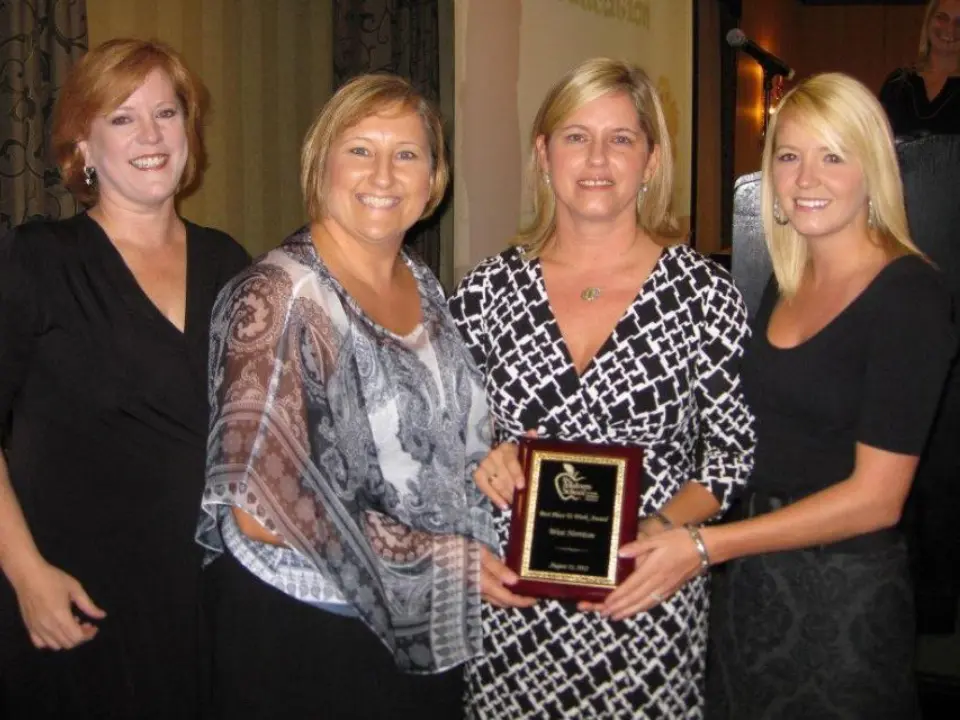
Here is photo proof - my Executive Director and I even won a company wide award “Best Place to Work” (& she's smiling because that was the first school-year I was 25)